Playing With Fire: The Unintended Consequences of Logging
Restrictions in the Northern Spotted Owl Habitat
Updated: October 2026
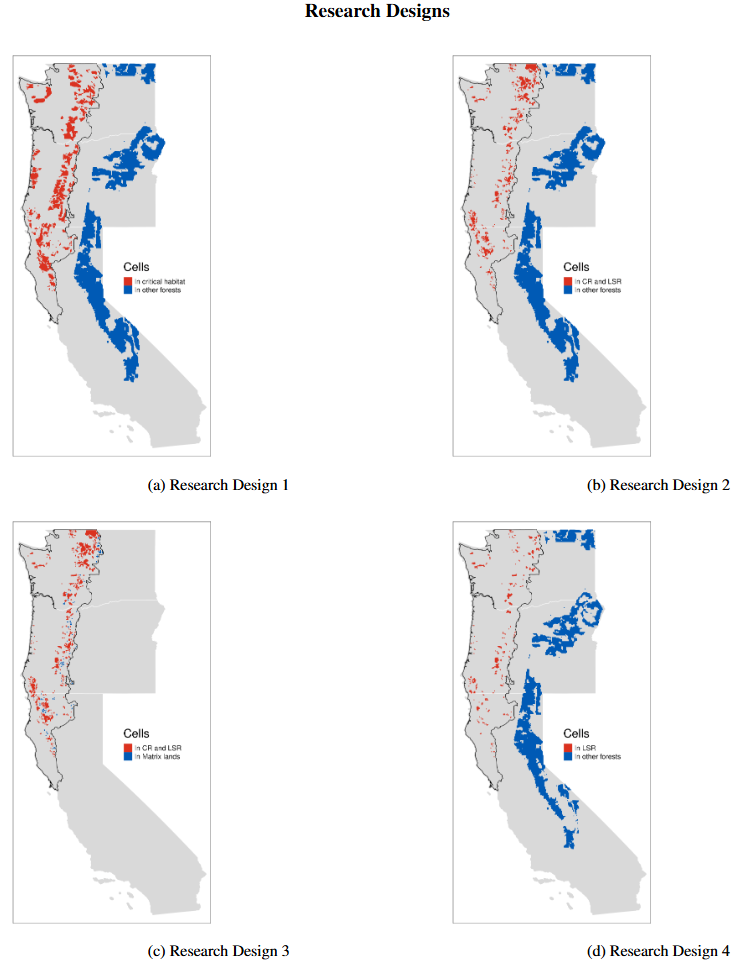
Abstract: Over the past four decades wildfire regimes in western North America have become more frequent, larger, and more severe. We consider whether this was influenced by the early-1990s land protections covering tens of millions of acres of old-growth forest in the northern spotted owl habitat, in the U.S. Pacific Northwest and Northern California. We find these restrictions on timber harvesting caused a significant increase in the areas of wildfire perimeters that burned at high-severity in the protected areas, almost certainly because the logging restrictions encouraged accumulation of vegetation fuels. This marked increase in fire severity in protected areas led to significant loss of biomass and canopy cover that more-than offset gains realized by restricting logging activity. Alongside this measured unintended policy consequence, severe wildfires often greatly harm affected ecosystems, and impose substantial economic costs on humans. We argue that qualified logging operations which reduce vegetation-fuel density could serve a beneficial, complementary role to prescribed burns in forest management plans that aim to reduce wildfire severity.